
Opinion: Collaborations
Interview questions by Jenn Cattaui, Babesta founder/owner
Answers by Katie Kendrick – Pirouette media -blog* magaZine* directory* agency* consultancy*
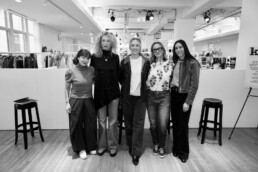
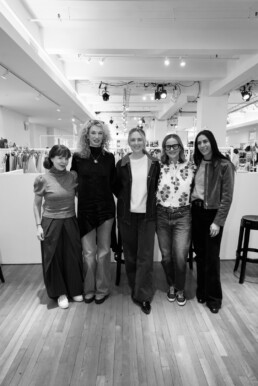
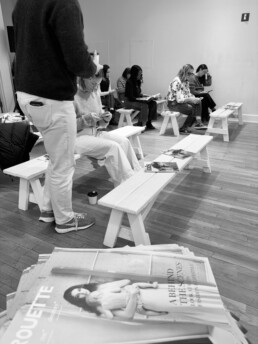
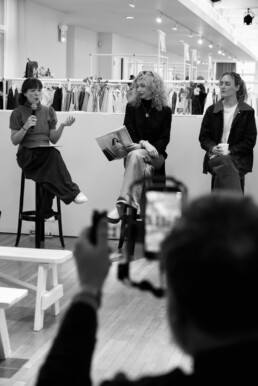
I was one of four panelists on the Earnshaw’s panel discussion on collaborations, which took place at Playtime New York. It’s a topic we also explored in the recent FW26 Pirouette MagaZine*
Traditionally, collaborations in the kids’ fashion and lifestyle industry ordinarily means two businesses producing a product together. In my view however, collaboration and the way we approach it is a hugely underused tool. Collaboration initiatives/ projects should form a key part of the marketing strategy for brands, retailers, and independent professionals looking ahead to success in 2026.
Jenn Cattaui, owner and founder of Babesta, who organised and moderated the panel, kindly shared questions with me in advance of the talk. I’m sharing my responses with you here, as on reflection there are several useful and I hope helpful points.
Let’s get collaborating, here you go!
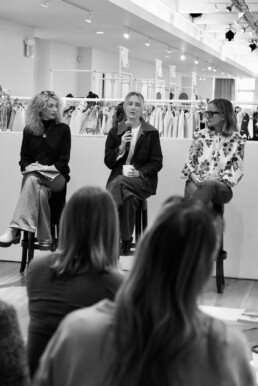
You’ve covered collaborations extensively in your magazine and have engaged in them yourself…
Yes. Since I first started in independent press, collaboration has always been part of the DNA. At its core, it’s about using your address book intelligently, bringing together people with different skills so everyone benefits.
For us, collaborators gain access to our platform, endorsement, connections, and community, and in return we benefit from their expertise, creativity, and reach. When it’s done well, it should be genuinely beneficial to all parties.
Why do you think collaborations are so important right now?
Collaborations or collaborative projects should be a major pillar of a brand’s annual marketing strategy.
What I think needs to shift, especially for independent brands, is how we think about collaborations. Too often, the default model is partnering with another brand to produce a new product. That can be beautiful, but it’s also time-consuming and expensive. At the end of the day, you’re still producing another product that then needs its own marketing budget and sales strategy.
I believe the future of collaborations lies more in events and communications-led partnerships. This doesn’t mean brands should stop creating products, but rather ask: why not take the products you already have and collaborate to promote and move them? That could be through online events, physical activations, or shared storytelling. Working together to amplify visibility rather than add complexity.
"Limited access, fresh perspectives, & unexpected partnerships make collaborations feel special rather than transactional."
Kate Kendrick
Pirouette
What’s happening in the market that makes this strategy so effective and why do you think it’s underused?
Personally, I think the independent kids’ fashion industry is somewhat behind when it comes to marketing technology and strategy.
Between the global pandemic, tariffs, inflation, and rising manufacturing costs, most small brands have been focused purely on surviving, getting production finished and delivering to retailers. That’s understandable, but it’s come at the cost of falling behind on modern marketing approaches.
The good news is it’s not too late. Getting up to speed doesn’t actually take that long, but it does require intention. Brands need to carve out time and budget for collaboration and treat it as essential, not optional. Even when inboxes are overwhelming.
How do collabs help brands cut through the noise?
I’ll explain this with a personal analogy. At university, I was consistently getting a B+ on written exams. When we had a group essay, I deliberately chose a team with the best analyst, the “Mr Knowledge” guy, and the person who never missed a detail. The result? We got an A+. I kept the same team after that.
The point is: I’m not A+ at everything, even if I am at a lot….;) but collaborating with people who are A+ in areas where you’re not is how you level up, succeed and ultimately remain focused on the task at hand.
What role do rising costs and the shift to first-party data play here?
Rising costs mean brands have to be smarter and more efficient. Collaborations allow brands to share audiences, resources, though I’m not sure to what point they will share their first party data.
From a cultural perspective, why do collabs resonate so deeply with customers, especially Gen Z and Millennial parents?
Because collaborations should feel limited and intentional. Even if they’re repeated, they should exist within a specific timeframe or quantity. That sense of scarcity creates desire it gives people a reason to show up now, not later.
How does exclusivity, novelty, or cultural crossover play into this?
This really ties into the same point. Limited access, fresh perspectives, and unexpected partnerships make collaborations feel special rather than transactional.
What emotional response are brands tapping into?
I’ll start by saying what I think brands aren’t tapping into enough… Yes, we all love the “cute factor,” the nostalgia, and the firsts but I think there’s room to be more transparent and realistic, and in some ways, take the emotion out of it.
For example, if you’re producing a collaborative event like a trunk show with several brands, you need to acknowledge what modern parents actually want. Especially those active on Instagram. They want glamour. They want beautiful venues, flowers, hair and nails done, moments worth sharing.
Influencers and content creators are there to capture and share the vision and yes, to be gifted. That aspirational layer is something we’re still under-utilising in kids’ fashion collaborations.
Katie, you’ve not only written about collabs, but as press, you’ve entered into some yourself. Can you share examples that worked well?
We’ve recently collaborated with Sticky Lemon on a limited-edition bag for Pirouette events. The quality and design are honestly insane we practically have to nail them down.
What’s fascinating is how organically it works: a few people walk around with the bags, and suddenly there’s an influx of people trying to find us to get one. They repost, tag us, and share I get DMs asking about them. It’s a perfect example of a product doing the marketing for you.
During Covid, I launched a large-scale collaborative project called Kids Digital Fashion Week, partnering with multiple kids’ fashion press platforms. Pirouette produced the event, created the schedule, and everyone shared brands’ collections and content across their platforms. It was actually a huge success at the time. Interestingly Instagram later introduced the collaborative posting features that mirrored what we were doing manually at KDFW. We could have really done with those tools! In many ways, we were ahead of our time :)
Any collabs that didn’t work as well as you’d hoped? Any learnings?
One collaboration that didn’t fully work was a creative shoot I invested in. Shoots are always challenging, and ironically, it’s one of the most beautiful shoots I’ve ever produced, but the photographer and I weren’t aligned post-production, and the content was never properly used. It was a valuable lesson: when you’re investing money into a collaboration, you need to know your collaborator really well, take the time ahead of the project to learn about them, be crystal clear on expectations in order to minimise any nasty surprises.
8 Top Tips on collaborating for Brands, Retailers & Professionals.
-
Think beyond product collabs: events and communication-led partnerships can be more effective and less costly.
-
Use what you already have: collaborate to promote existing products rather than creating new ones.
-
Be intentional with scarcity: limited time, limited quantity, limited access.
-
Collaborate to strengthen your weaknesses : partner with people who are A+ in areas where you’re not.
-
Allocate time and budget: collaboration only works if it’s treated as a priority.
-
Understand modern parent culture. Aesthetics, aspiration, and shareability matter.
-
Get aligned upfront: especially when money is involved. Clarity prevents disappointment.
-
Done well, collabs market themselves: the best ones create organic buzz, not forced campaigns.


Subscribe to our Pirouette Newsletter
For news, updates and insights into the business of kids fashion & lifestyle
You might also like
The Cartable Approach – Kids Fashion & Lifestyle Communication Agency, UK
Cartable is a communications agency for kids’ fashion, interiors and lifestyle brands, born out of a love for strong aesthetics and storytelling. Working closely with independent brands, founder…
Disco Pool Party- Runway Images by photographer Abi Campbell
Pirouette’s Disco Pool Party Runway, SS27 The Disco Pool Party is a time to celebrate, to have fun together and smile. It’s important to have one balloon drop in your life time ;) well that has…
Disco Pool Party Runway Looks
PITTI BIMBO 103 >>> 24-25 June 2026, Fortezza da Basso, FlorenceAs captured by Abi Campbell. Abi’s photography captures both the personality of her subjects and the unique vibe of the event.…
Roxy Horner & Jack Whitehall’s Daughter Wears Et Liberi in Vogue Wedding Feature
Put the right people together, and watch what happens.
Get ready for Piazza Pirouette Disco Pool Party @PittiBimbo103
Kids' Fashion FUN, with a capital F...Piazza Pirouette @PittiBimbo 103, SS27 newness.Prepare to be dazzled!24-25 June, Firenze, ItlayPiazza Pirouette returns for its third edition at Pitti Bimbo 103…
The Power of Collaboration – Thinking Beyond Product
Original article Pirouette MagaZine* FW26 Selling Season. Collaboration has become a buzzword in fashion, but too often it is understood in a narrow, product-led way. In today’s market,…
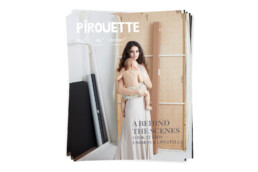
EDITORS LETTER: Getting your ducks in a row!
Pirouette MagaZine* article: Original article Pirouette MagaZine* FW26 Selling Season. Pirouette Maga(zine), because you’re worth it. 2026 is the year to get your ducks in a row in the kids’…
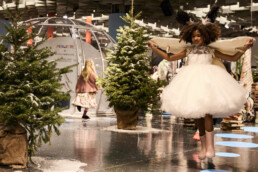
The Runway
Pirouette’s The Winter Moth Runway, FW26 The Winter Moth tells the tale of a dreaming girl who, once asleep, transforms into a winter moth. She drifts into a magical forest, accompanied by her clumsy…
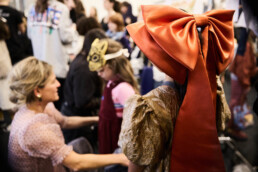
Backstage at the Winter Moth runway
PITTI BIMBO 102 >>> 25-26 June 2025, Fortezza da Basso, Florence Behind the scenes at the Pirouette FW26 runway show Behind every runway show is an army of models, dressers, hair &…
